Separation is a life lesson that no one can avoid. In Chinese culture, conversations about life and death are difficult enough; for individuals with intellectual disabilities and their families, this journey presents even deeper challenges.
As life expectancy continues to rise, people with intellectual disabilities—like any of us—must confront the loss of family members and friends, the illness of peers, and even the death of loved ones. When grief, anxiety, and helplessness arise, they may struggle to express their feelings due to limitations in language or cognition, which can affect their daily motivation and psychological stability.
Many people mistakenly believe that individuals with intellectual disabilities "do not understand" death, or that they are "unable" to make medical decisions. In reality, the concept of death is not entirely abstract to them. Through experiences such as the passing of relatives, the loss of pets, or even their own physical discomfort, they can gradually form an awareness of life's end.
Hui-Fang Lin, Secretary-General of the Parents’ Association for Persons with Intellectual Disability in Taiwan, observes: "We cannot make decisions for them based on our own values. What we can do is lay out the information, help them sense and imagine, and give them the opportunity to choose." Therefore, establishing a system of life-and-death education and medical decision-making support that is understandable, participatory, and expressive has become an urgent issue in the field of palliative care.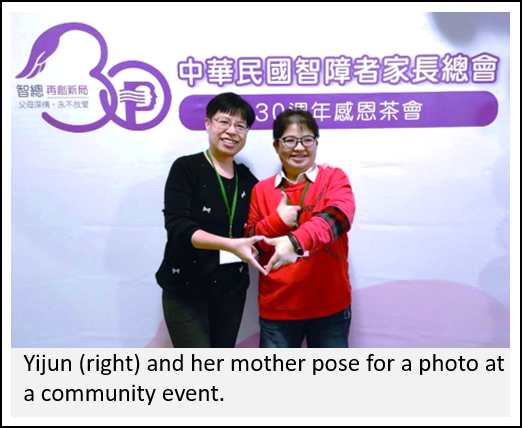
Life-and-Death Education Beginning with Emotional Experience
Yijun is a young woman with a mild intellectual disability. When she speaks about missing her late uncle and grandmother, she pauses and softly says, "I look at their photos, listen to the music they liked, and watch the TV shows they used to enjoy." Having experienced the death of a family member as early as sixth grade, she has developed a unique sensitivity and awareness regarding life and death.
Life-and-death education should never be limited to the transmission of knowledge alone; it must begin with life experience. Yijun's mother recalled that the family never deliberately avoided talking about death with her. When Yijun's uncle passed away, she was still young and resisted visiting the hospital because she was frightened by the sight of medical tubes. As she grew older, however, she began to proactively raise questions about death with her family and teachers.
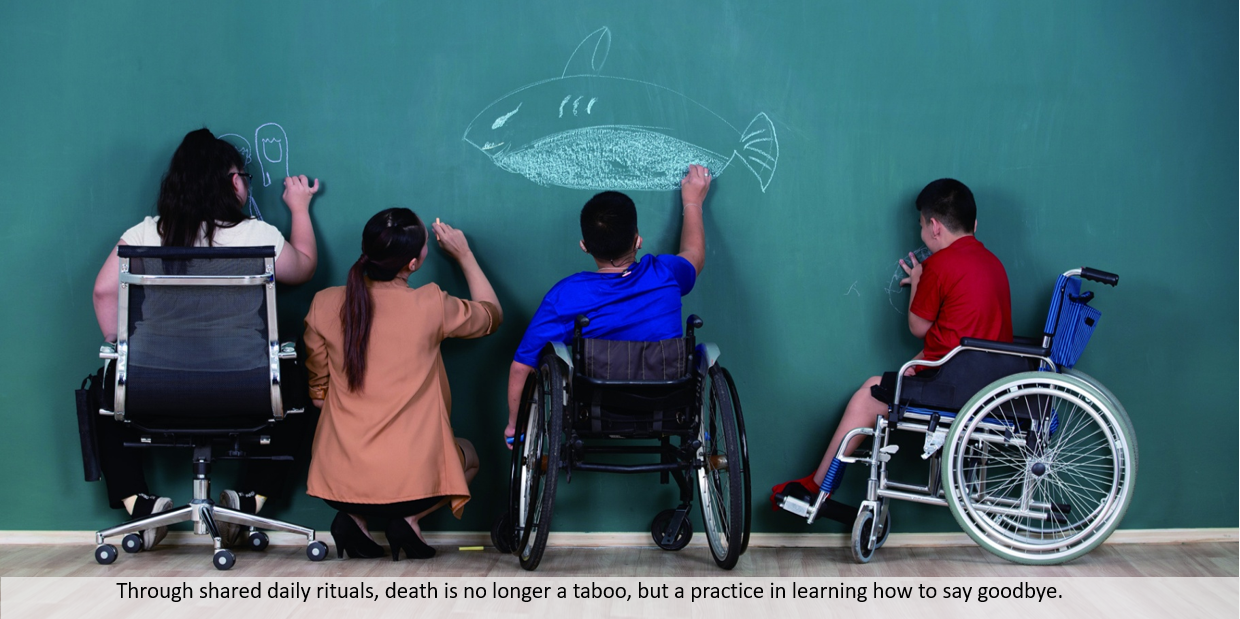
Later, when her grandmother passed away, the entire family folded paper lotus flowers together for a whole year. Yijun, who had been very close to her grandmother, participated throughout the process despite learning more slowly. This shared journey of remembrance and healing not only taught her to turn love into action, but also helped her learn how to face separation.
Over the years, Yijun has learned to explore life-and-death issues on her own—searching for information online and asking friends, gradually finding her own answers. This active learning has eased her fear of death. She candidly shared, "I'm slowly finding some answers, and I'm less afraid now." If there were life-and-death courses designed specifically for people with intellectual disabilities, she said she would be eager to participate because "I want to learn and prepare myself."
Reaching Consensus on Medical Choices Through Communication
When asked whether she would be willing to sign an Advance Decision (AD) for herself, Yijun replied without hesitation, "Yes, I want to." However, she also raised a critical question: "If I sign it and my family disagrees, who will the doctor listen to?"
Yijun's concern reflects the practical challenges of Taiwan's Patient Right to Autonomy Act. Although the law is intended to safeguard individual wishes, in clinical practice medical professionals still tend to defer to family opinions. She stated clearly, "I hope doctors listen to the patient, not only to the family." Medical autonomy can only be realized when consensus is reached with family members before signing the document.
For most families, discussing life-and-death issues is already difficult; for families of people with intellectual disabilities, it is even more so. Hui-Fang Lin noted that the Act includes five clinical conditions under which it can be activated, but for people with moderate to severe intellectual disabilities, understanding these complex scenarios can be challenging. It requires additional time, extensive explanation, and personal life experiences to support comprehension.
They often need concrete examples—such as terminal cancer or the inability to eat—to build understanding. Moreover, even individuals with relatively good expressive abilities, like Yijun, are often excluded because the medical system does not understand their communication styles, such as non-verbal expression. Future policy design must prioritize the establishment of "understandable dialogue mechanisms" and provide "tangible links to life experiences."
The Caregiver's Dilemma Between Holding on and Letting Go
From Yijun's story, it becomes evident that her mother is a highly disciplined and forward-planning caregiver—and this is indeed true. "I keep a family information binder with all our important records, plus digital backups," she explains. Her determination grew from witnessing the confusion a friend's family faced after a sudden fatal car accident: "No one even knew where the bankbooks were. I never want to experience that kind of chaos." By contrast, Yijun's father tends to avoid conversations about death, often saying, "Don't talk to me about these things—just talk to our son." This difference in attitudes reflects how many families vary in their approach to end-of-life issues.
 Yet the greatest inner struggle for caregivers is often their own difficulty in letting go when confronting mortality. Hui-Fang Lin shares that, in most cases she has encountered, parents facing serious illness find decision-making even harder because of their concern for a child with intellectual disabilities. This "bond of love" ironically becomes the very barrier that prevents them from choosing a peaceful and dignified end.
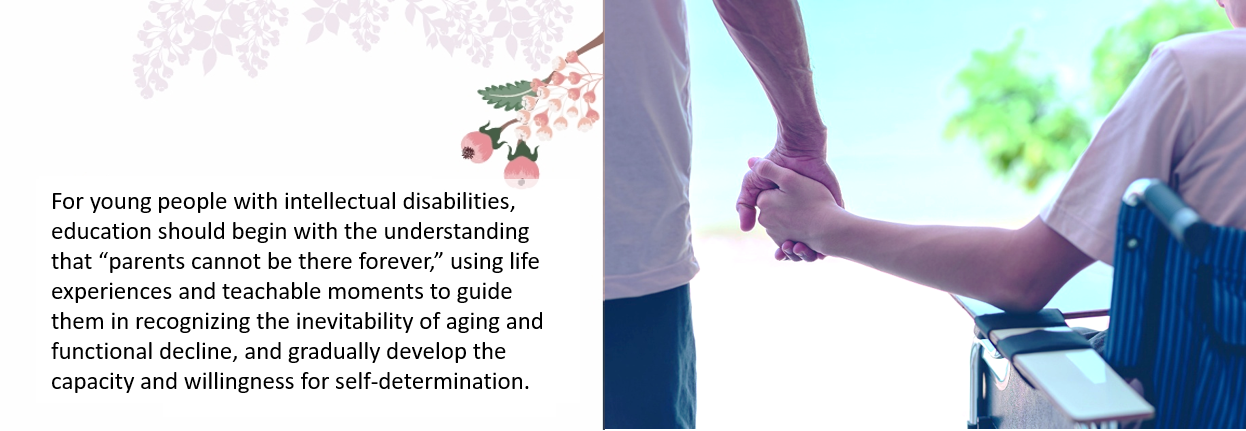
She emphasizes that different families and age groups need different forms of preparation. For older adults and "double-aging" families, early planning that integrates health, financial, and care considerations is crucial. For younger individuals with intellectual disabilities, guidance should start from the understanding that "parents cannot be there forever," using everyday experiences and teachable moments to help them recognize the realities of aging and decline, and gradually build the capacity and desire for self-determination.
Helping Everyone Walk the Final Mile with Dignity
Although the Patient Right to Autonomy Act still limits the ability of people with moderate to severe disabilities to sign independently, "education about death can no longer wait," Hui-Fang Lin emphasizes. "Understanding death is not a single lesson, but an accumulation of lived experiences." From witnessing a pet's aging and passing to the loss of family members, being gently guided through everyday experiences may take time, but proves far more effective than one-time lectures on life and death.
Caregivers and institutions must also devote greater effort to helping individuals develop ways to express their wishes beyond spoken language, ensuring that the question, "How do you want to complete this final stretch?" is not a privilege reserved only for those without disabilities.
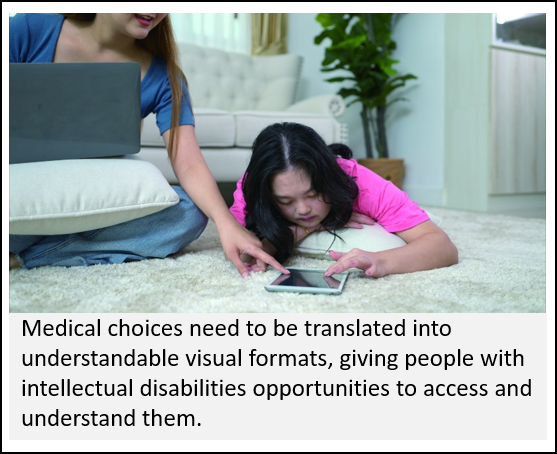
Hui-Fang Lin stresses that people with intellectual disabilities deserve medical autonomy as well. Even when their ability to express or judge is limited, they should be respected, supported, and provided with appropriate assistance in decision-making. "This is not merely a matter of policy design, but one of human dignity and the right to choose." In practice, promoting easy-to-read resources is essential. When medical decision-making information is presented through visuals, simplified text, or scenario-based simulations, individuals with intellectual disabilities can better understand procedures such as intubation or cardiopulmonary resuscitation (CPR), and more clearly express their own preferences.
Everyone deserves to complete their life journey with care and dignity, regardless of verbal ability or intellectual capacity. When we are willing to listen and to walk alongside them, we discover that they understand love—and they also understand how to say farewell.