
At the end of life, people with intellectual disabilities are often unable to express their needs because of limited communication abilities, while systemic gaps further deprive them of meaningful choices about how they wish to spend their final days. Families bear the long-term pressures of caregiving, and medical teams frequently struggle to find consensus within the gray areas of law and ethics. Frontline professionals hope that understanding can begin through dialogue and that stronger institutional support can take root, creating a path toward dignity and peace for those whose final journey is too often overlooked.
As life expectancy continues to rise, people with intellectual disabilities—like any of us—must confront the loss of family members and friends, the illness of peers, and even the death of loved ones. When grief, anxiety, and helplessness arise, they may struggle to express their feelings due to limitations in language or cognition, which can affect their daily motivation and psychological stability.
Many people mistakenly believe that individuals with intellectual disabilities "do not understand" death, or that they are "unable" to make medical decisions. In reality, the concept of death is not entirely abstract to them. Through experiences such as the passing of relatives, the loss of pets, or even their own physical discomfort, they can gradually form an awareness of life's end.
Hui-Fang Lin, Secretary-General of the Parents' Association for Persons with Intellectual Disability in Taiwan, observes: "We cannot make decisions for them based on our own values. What we can do is lay out the information, help them sense and imagine, and give them the opportunity to choose." Therefore, establishing a system of life-and-death education and medical decision-making support that is understandable, participatory, and expressive has become an urgent issue in the field of palliative care.
The Voices Lost and the Needs Unspoken
Because of cognitive and communication limitations, people with intellectual disabilities are often labeled as "lacking decision-making capacity" during the course of illness. Chih-Ting Tseng, Head of the Social Service Department at Tamsui MacKay Memorial Hospital, observes that many terminally ill patients with intellectual disabilities may sense that “something is wrong” physically, yet lack the language skills to explain it clearly. Instead, they may express distress through shouting, agitation, or restlessness. "Clinically, even when these patients are in unbearable pain, they are often not fully understood by medical staff," she says solemnly.
Even more concerning is that their needs are frequently ignored or considered unnecessary to acknowledge.
"He doesn't understand, so don't tell him." Tseng has heard this more than once in the hospice ward. Many families insist on withholding the diagnosis, believing that "knowing will only increase fear." However, in her view, this is a profound form of deprivation. Many people with intellectual disabilities have never been taught about death. They may be excluded from funerals and never invited to participate in or understand the process of losing loved ones. "As a result, when death finally comes for them, they are not only confused about what is happening but they also face fear and isolation alone."
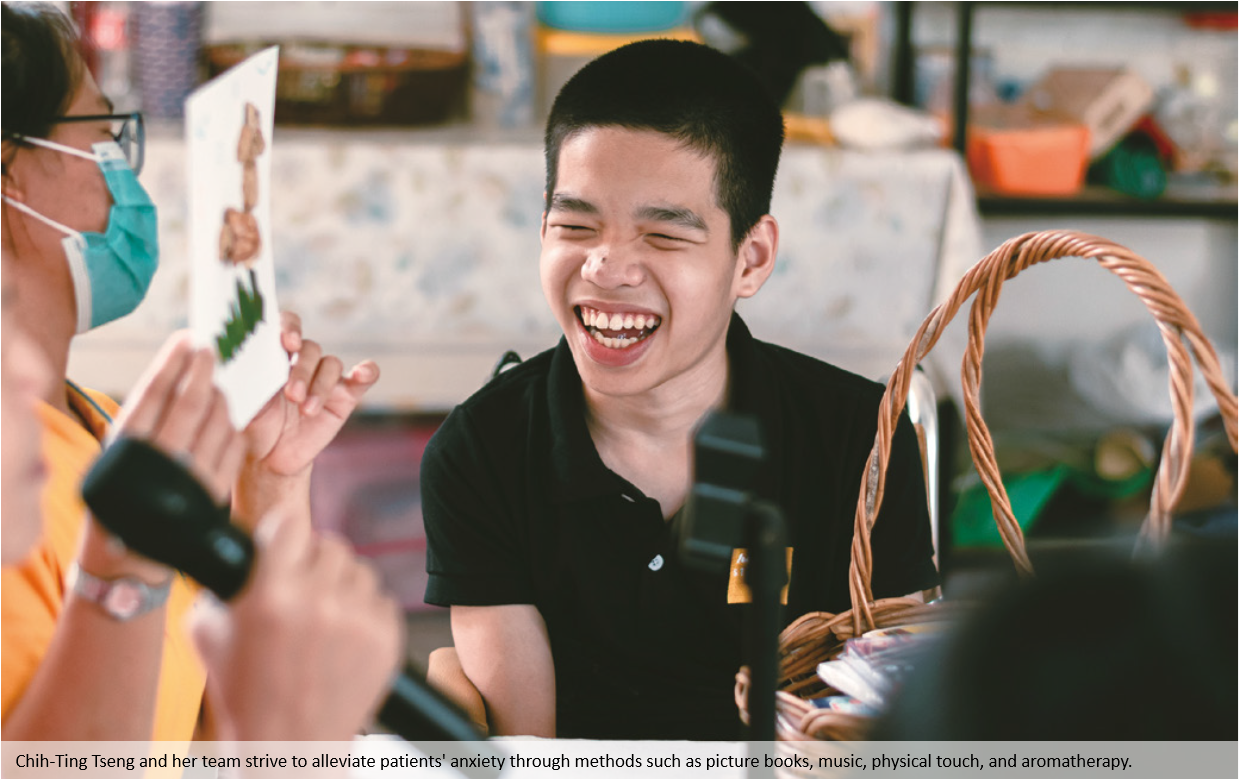
In response, Tseng and her team seek alternative methods—through picture books, music, physical touch, and aromatherapy. Though seemingly simple, these forms of companionship can ease anxiety and bring a sense of familiarity and warmth into the unfamiliar hospital environment.
The Tug-of-War Between Love and Exhaustion: Families Reaching Their Limit
As a social worker, Tseng witnesses not only the silence of patients, but also the helplessness of families and the fractures within the system. "It's not for lack of love, but lack of options."
She recalled one patient with an intellectual disability who was brought to the hospital with a liver tumor already exceeding ten centimeters. "Only after questioning the family did the medical team discover that the patient’s mother had known about the illness for over a year, but chose not to pursue treatment and concealed the diagnosis from the residential facility." Tseng remembers that even when the patient was hospitalized, the mother refused paracentesis and antibiotics, insisting on "letting him go naturally."
Initially, the medical team felt anger and frustration, believing she was disregarding the patient's rights. But after talking with her, Tseng understood the mother's predicament: "She had been caring for her child alone for many years after her husband passed away early, and the financial burden was overwhelming. If she pursued treatment, the child would be evicted from the facility, and she would have to quit her job to provide care. The entire family's livelihood world would collapse."
"In families of individuals with intellectual disabilities, this conflict between medical ethics and reality is common," Tseng says helplessly. Decisions that appear "cold-hearted" from the outside are often choices made in complete isolation and desperation.
Dr. Tsung-Yu Yen, an attending physician at the Mackay Hospice and Palliative Care Center, shares this sentiment. "Even if we save him, he still still remain intellectually disabled." His words may sound blunt, but they represent a struggle many families dare not say aloud.
In clinical settings, he often sees these patients repeatedly admitted for infections, kidney failure, or bleeding. Families often flatly refuse intubation or antibiotics. These decisions are not made out of a lack of love, but out of the exhaustion and powerlessness accumulated over many years of providing care.
"In standard hospice consultations, physicians spend a long time communicating with families to persuade them to choose palliative care. However, in cases involving individuals with intellectual disabilities, families often decide faster than we do," Dr. Yen notes with empathy. This directness is actually a rational judgment formed after years of caregiving. "These families have already since seen the progression of the illness clearly, knowing that further treatment may only prolong suffering and financial hardship."
When love and responsibility collide, the "stop-loss point" for families of individuals with intellectual disabilities arrives earlier and more decisively than it does for other patients.
Medical Staff in a Dilemma When Consent Becomes a Void
W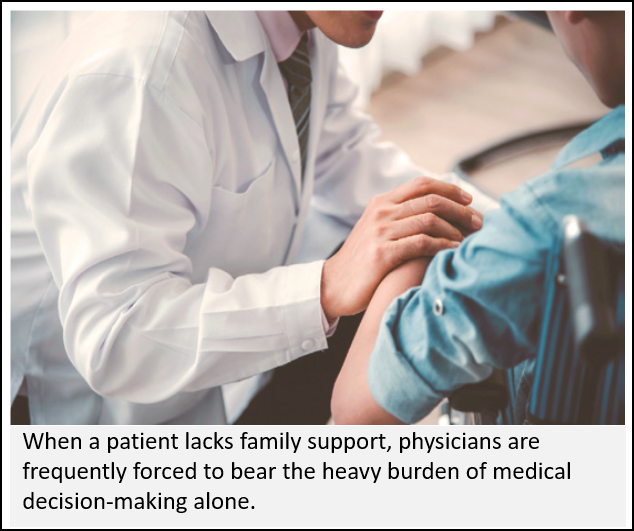 hen asked about the most difficult challenge in caring for these patients with intellectual disabilities, Dr. Yen answers without hesitation: "Intellectually disabled patients are without family."
While "patient autonomy" is a fundamental principle of major treatment decisions, it is hard to implement here. Dr. Yen points out that most intellectually disabled patients are viewed as having "immature cognitive capacity," meaning medical decisions are typically made by guardians or family members. "The problem is that not everyone has a legally appointed guardian."
He recalled patients arriving at the hospital unable to understand their illness or communicate their wishes—and without any family members or guardians. This leaves medical teams facing an impossible question: Who is to sign the consent forms? "Some patients are long-term residents in institutions, but legally, these institutions lack authority to sign medical documents on their behalf."
Dr. Yen also described one patient with no known relatives whose identity was so unclear that even the name on the patient’s identification card had been assigned by the Social Affairs Bureau. In situations like these, who should decide whether treatment continues?
Under Taiwan’s revised regulations, life-sustaining treatment may be withdrawn if two physicians determine that a patient is terminally ill. But this effectively forces physicians into the role of "temporary guardian," placing a tremendous emotional burden on them.
"Not all doctors are willing to bear this," Dr. Yen admits. While the Hospice Palliative Care Act provides a legal basis, in practice the burden often falls upon the few physicians willing to shoulder the responsibility.
Therefore, he calls for a more seamless integration of the system. The medical sector needs to establish stable cooperative models with social welfare and disability services, ensuring that the link between institutions and hospitals is no longer just a one-way street of "sending and receiving patients," but a partnership that can collaboratively plan end-of-life care. The government should also clarify the responsibilities regarding guardianship and signing authority to prevent hospital directors or social workers from being trapped in legal gray areas. At the same time, support for medical teams is indispensable, as these decisions are not merely legal matters, but they concern how a human life reaches its end.
A Vision for Integration Amid Systemic Fragmentation
As a medical social worker specializing in end-of-life care, Chih-Ting Tseng deeply understands the fragmentation between different service systems. On the medical side, staffing shortages often force healthcare teams to simply defer to the family's wishes when a patient is dying. On the institutional side, residential facilities are often paralyzed by regulatory constraints, leaving them with no choice but to discharge patients as their conditions worsen. Meanwhile, social administration and disability services often lack the resources for long-term support. These systemic gaps leave people with intellectual disabilities into "isolated islands" during the most vulnerable stages of life.
Tseng believes the key to improvement is not to wait until a patient reaches the end of life to rush a remedy. Instead, life education must begin much earlier, allowing facility staff, families, and even the individuals themselves to gradually encounter the concepts of "death and grief" within everyday life, learning how to talk about them and face them together.
She also emphasized the importance of institutionalizing cross-sector collaboration. Healthcare, social welfare, and disability services need a permanent platform for cooperation, ensuring that support systems remain connected when patients move between services and settings.
She emphasizes that different families and age groups need different forms of preparation. For older adults and "double-aging" families, early planning that integrates health, financial, and care considerations is crucial. For younger individuals with intellectual disabilities, guidance should start from the understanding that "parents cannot be there forever," using everyday experiences and teachable moments to help them recognize the realities of aging and decline, and gradually build the capacity and desire for self-determination.
She also points out that the government should invest more resources to ensure that medical and social work teams have sufficient personnel to handle complex cases. Such support would also reduce the pressure and fear experienced by institutions caring for terminal residents. "We must first learn to hold our own fears before we can accompany them through their grief and helplessness," Tseng says. In her eyes, this is no longer a simple medical issue, but a lesson that society as a whole must learn to face together.
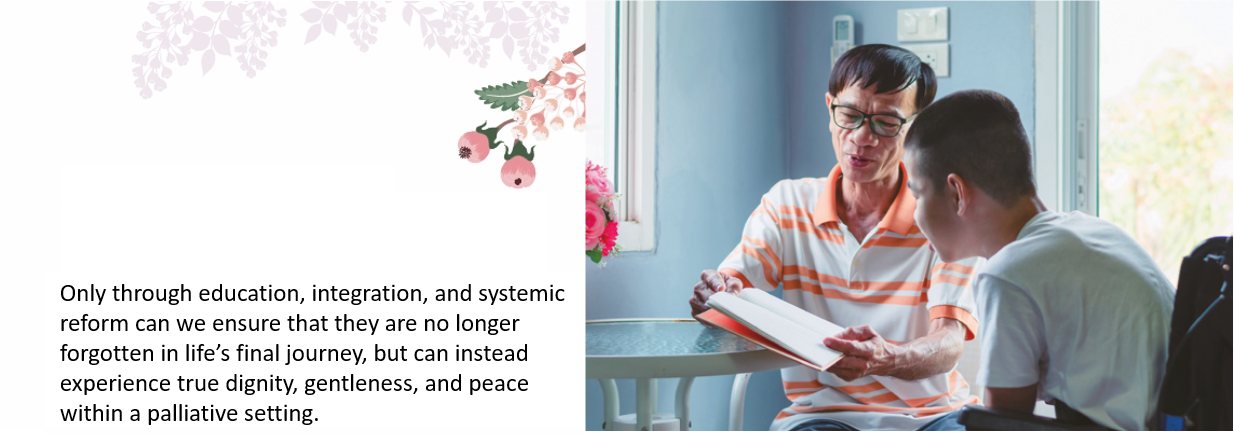
"It is not that they cannot understand; it is that we haven't helped them understand." This statement by Tseng points directly to the blind spot of the current system. In the face of major illness and terminal stages, individuals with intellectual disabilities should not remain passive recipients of decisions. They need others to translate their needs, and more importantly, they need systems capable of building a network of support around them. Only through education, integration, and systemic reform can we ensure that they are no longer forgotten in life's final journey, but can instead experience true dignity, gentleness, and peace within a palliative setting.