
(英文全文附於下方 / English version follows below)
死亡,是每個人終將面對的人生課題,卻往往因陌生與不安避而不談。培養「死亡識能」有助於我們面對死亡、支持他人與尋求資源,當個人、家庭、社區與醫療體系都發揮所長時,死亡便不再只是醫療現場的議題,而是彼此陪伴的生命經驗。
培養死亡識能,有助於個人、社群與服務體系提升相關知識、信心、連結與同理心,安然面對臨終、死亡、傷慟與後事安排。
大多數人走到人生某個時刻,都會經歷親友生重病、臨終、傷慟或處理後事的情況,希望從旁給予支持,但許多人仍舊不確定該說什麼、該向何處尋求協助,或該如何提供支持。死亡與臨終照護仍是難以啟齒的話題,許多人往往等到危機來臨才願意討論。
從認識死亡開始準備
建立死亡識能(Death Literacy)是一個充滿希望的起點。它是一套知識與技能,讓人能夠取得、理解並運用臨終照護與後事安排的各種選項。個人與社區倘若具備較高的死亡識能,對所處環境的死亡照護體系(Death System)不但有具體認識,亦能將相關知識化為行動。死亡識能並非要求人人成為專家,也不是要家庭與社區扛起醫療服務體系的工作,而是承認,臨終、死亡、後事安排、關懷與哀傷,不只是臨床議題,也是你我都會面臨的社會經驗。
從公衛安寧緩和療護的角度來看,強化死亡識能可以是切實可行的目標。我們在拉籌伯大學(La Trobe University)的研究將死亡識能定義為:人們從死亡與臨終所累積的經驗與學習,也是強化未來照護能力的一種資源。換句話說,社區可以透過參與來培養死亡識能,包括對話、照顧、解決實務問題、共同省思與相互扶持。
讓死亡成為社區的事
在具備死亡識能的社區裡,大家能夠坦然談論自己重視的事情、詢問親友的意願,也知道到哪裡找到適合的支援。家人與朋友也能更有信心,共同分擔照護工作的實務與情緒。鄰里、職場、學校、社區團體、信仰社群與地方服務機構等,都能發揮力量,確保大家面臨疾病、死亡、哀悼時不必孤單。
其中,醫護人員與醫療體系扮演不可或缺的角色。除了臨床治療之外,死亡識能更擴及體系引導、倡議、心理社會支持,以及醫療、社區與社會服務之間的連結。隨著社區教育的推展,臨床工作者也需要掌握相關資訊、團體、方案與非正式網絡,以期在病人臨終前、臨終當下與身故後持續支持病人與家屬。澳洲逐漸有民眾詢問醫療體系可能尚未發展的選項或照護方式,例如有些家庭希望自行處理後事與喪葬安排。
醫療端也要接住社區
我們也開始測量醫護人員的死亡識能程度,並檢視臨床場域的相關溝通障礙,但有關具體臨床死亡識能介入措施的實證,目前仍屬初步階段。根據一項針對144名澳洲臨床醫療人員的調查,不同專業領域各有優勢,但部分臨床人員在理解、取得並運用臨終照護選項的能
力仍存在落差(見Bonvino等人,2026年)。另一項急症醫院調查則指出,非專科人員表示之所以迴避談論臨終議題,原因包括時間壓力、臨床判斷的不確定性,以及擔心造成病人不安。這些研究發現凸顯出教育、支持與角色示範的重要性,不僅有助於專業人員談論死亡,也能協助他們認識並強化家庭與社區的既有能力。
由技能(Skills)、經驗(Experience)、行動(Action)與知識(Knowledge)建構而成的SEAK模型,提供了一套實用框架。我們發展出這套模型,旨在將死亡識能的觀念推廣到社區與臨床場域。臨床互動可將它當成實用的提示:這位病人或家屬已具備哪些技能、經驗、行動與知識?SEAK模型的價值在於,對話焦點不再集中於這家人的不足之處,而是轉向他們有哪些優勢、關係、生活經驗,是值得相關服務體系肯定並強化的環節。它能協助家庭思考既有的優勢,能否將服務體系提供的支持發揮最大效益。
讓每種生命都被理解
每個人的需求、信念、家庭結構、文化習俗,以及面對失落的經驗,都存在極大差異。培養死亡識能需要傾聽,也需要提供資訊,因此要讓人有機會省思自身價值觀、聆聽他人經驗,並建立尊重多元、講究文化安全,且切合在地脈絡的因應措施。我們也看到相關政策發展的契機,亦即醫療體系與死亡照護體系得以針對社區需求,打造出靈活有彈性的因應作法。
死亡識能亦關乎平權。並非人人都能取得相關資訊、支持性的關係、符合文化需求的服務,或投入照顧所需的時間與資源。以社區為本的作法,必須創造多元化的參與管道,尤其是為面臨社會、文化、地理或經濟障礙的族群而設。
從日常開始培養對話
死亡識能的培養從小處做起,例如騰出時間討論哪些是生命終點真正重要的事、主動關心正在經歷喪親之痛的人、認識在地的支持資源、思考我們所屬的組織如何因應死亡與失落。社區與服務體系要提升死亡識能,光靠資訊並不夠,還需要透過對話、省思、經驗、專業夥伴關係與集體行動,才能達成。
死亡識能提醒著我們,臨終照護是眾人之責。一旦個人、家庭、社區、醫護人員與政策制定者都能認清自身角色,並攜手合作,死亡識能便能持續提升。若能讓死亡與臨終成為更容易談論的課題、讓支持資源的可見度提供又易於取得,並讓社區的力量更容易動員,我們便能朝目標往前邁進,亦即確保沒有人在面對臨終、死亡或傷慟時,感到孤立無助。
--------------------------------------------------------------------------------------------------------------------------------------------------
Death literacy: building communities and services that can face dying, death and loss
Death literacy helps people, communities, and services respond to dying, death, bereavement, and after-death care with greater knowledge, confidence, connection, and compassion.
Most of us will, at some point, support someone through serious illness, dying, bereavement, or the practical decisions that follow a death. Yet many people feel uncertain about what to say, where to seek help, or how to offer support. Dying and end-of-life care can remain difficult to discuss until a crisis makes the conversation unavoidable.
Death literacy offers a hopeful starting point. It is the knowledge and skills that enable people to access, understand, and act upon end-of-life and death care options. People and communities with stronger death literacy have context-specific knowledge of the death system and can put that knowledge into practice. It is not about expecting everyone to become an expert, nor about asking families and communities to take on the work of health services. Rather, it recognises that dying, death, after-death care, caring, and grieving are social experiences as well as clinical ones.
In public-health palliative care, strengthening death literacy can be a practical goal. In our research at La Trobe University, we have described death literacy as an outcome of people's experiences of, and learning about, death and dying and as a resource that can strengthen capacity for future caring. In other words, communities build death literacy through participation: through conversations, caregiving, practical problem-solving, shared reflection, and mutual support.
A community that is death literate is one where people can speak more openly about what matters to them, ask about a loved one's wishes, and know where to find appropriate support. Family members and friends may feel more confident sharing the practical and emotional work of care. Neighbours, workplaces, schools, community groups, faith communities, and local services can all help ensure that people are not left alone when illness, death, or grief enters their lives.
Health professionals and health systems are essential in this work. Death literacy extends beyond clinical treatment to system navigation, advocacy, psychosocial support, and connections between healthcare, community, and social services. As community education expands, clinicians also need to be aware of the information, groups, programs, and informal networks that can support patients and families before, during, and after a death. In Australia, we are seeing evidence for people asking about options or care that health systems may not yet have developed practices for - such as families wanting to do their own deathcare and funeral arrangements.
We are also beginning to measure death literacy among health professionals and to examine related communication barriers in clinical settings; evidence for specific clinical death-literacy interventions remains preliminary. An Australian survey of 144 allied health clinicians found discipline-specific strengths alongside gaps in some clinicians’ ability to understand, access, and act on end-of-life care options (See Bonvino et al., 2026). In an acute-hospital survey, non-specialist staff reported time pressure, clinical uncertainty, and concern about upsetting patients as barriers to conversations about dying. These findings point to the value of education, support, and role modelling not only in how professionals speak about death, but also in how they recognise and build on family and community capability.
The SEAK model - Skills, Experience, Action, and Knowledge - provides a useful framework. We developed it as an accessible way to bring death literacy concepts to life in community and clinical settings. In clinical encounters, it may provide a useful prompt: what skills, experience, actions, and knowledge does this person or family already have? Its value lies in shifting the conversation away from what families lack and towards the strengths, relationships, and lived expertise that services can acknowledge and strengthen. It can help families to consider their existing strengths and where they can make the most of supports delivered by services.
People's needs, beliefs, family structures, cultural practices, and experiences of loss differ widely. Building death literacy requires both listening and informing. It means creating opportunities for people to reflect on their values, hear from others, and develop responses that are respectful, culturally safe, and locally meaningful. We are also seeing that there is an opportunity for policy development - for health systems and death systems to create flexible responses to community need.
Death literacy also has an equity dimension. Not everyone has the same access to information, supportive relationships, culturally appropriate services, or the time and resources needed to care. A community approach must create multiple pathways for participation, particularly for people facing social, cultural, geographic, or economic barriers.
Building death literacy begins with small acts: making room for a conversation about what matters at the end of life; asking someone who is grieving how they are managing; learning about local supports; or considering how our organisations respond to death and loss. Communities and services become more death-literate not through information alone, but through conversation, reflection, experience, professional partnership, and collective action.
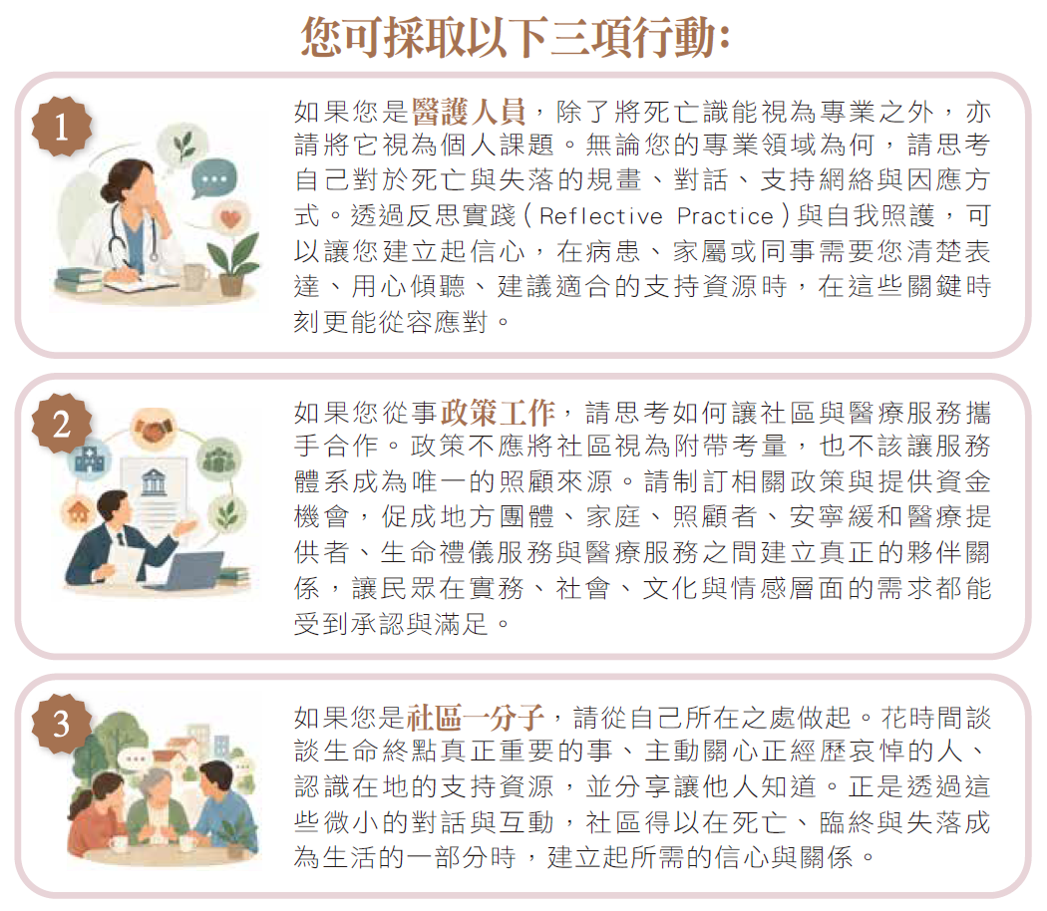
Three actions you can take:
- If you are a health professional, make death literacy personal as well as professional. Whatever your discipline, consider your own plans, conversations, support networks, and responses to death and loss. Reflective practice and self-care can build confidence for the moments when patients, families, or colleagues need you to speak clearly, listen well, and connect them with appropriate support.
- If you work in policy, ask how community and health services can work together. Policies should not treat communities as an afterthought or services as the only source of care. Create policies and funding opportunities that enable genuine partnerships among local groups, families, carers, palliative care providers, funeral services and health services so that people’s practical, social, cultural, and emotional needs can be recognised and met.
- If you are a community member, begin where you are. Make room for a conversation about what matters at the end of life. Ask someone who is grieving how they are managing. Learn about local supports and share that knowledge with others. Small conversations and acts of connection are how communities build the confidence and relationships needed when death, dying, and loss become part of everyday life.
Death literacy reminds us that end-of-life care is a shared effort. It grows when individuals, families, communities, professionals and policymakers recognise their roles and work together. By making death and dying easier to talk about, support more visible and accessible, and community strengths easier to mobilise, we can make progress toward the goal of ensuring that no one faces dying, death or grief without connection, support and care.
Here are some recent papers you may find useful:
SEAK Model:
- Noonan, K., & Read, N. (2026). Death literacy as community practice: Learning through skills, experience, action, and knowledge. In E. Hodges & M. Patel (Eds.), Compassionate communities in action: Global stories of care, loss and connection. Routledge. https://doi.org/10.4324/9781003621348-24
Death literacy Research:
- Shrestha, S., Grindrod, A., Lee, S., & Noonan, K. (2026). Changing contexts of death and dying: Influence of the COVID-19 pandemic and voluntary assisted dying legislation on death literacy in Australia. Palliative Care and Social Practice, 20, 1–11. https://doi.org/10.1177/26323524261473623
- Lee S, Noonan K, Grindrod A, Shrestha S. Death literacy as relational capability: Pathways from social capital to emotional support. Palliative Care and Social Practice. 2026;20. doi:10.1177/26323524261461311
- Van Dinther, K., Noonan, K., Leonard, R., & Javanparast, S. (2025). The Death Literacy Index: Testing the death system literacy of unpaid carers of palliative patients. OMEGA–Journal of Death and Dying. Advance online publication. https://doi.org/10.1177/00302228251319478